
You see the badge everywhere on listings, a small, shiny medal that tells travelers, “This host knows what they’re doing.” It’s the Airbnb Superhost badge. But in 2026, earning that badge isn’t just about being nice; it’s about hitting specific performance metrics that prove your reliability.
Whether you are a new host aiming for your first badge or a veteran trying to maintain your status, the rules remain strict but achievable.
Read on to learn exactly what Airbnb requires this year, why you should care, and how to safeguard that status once you earn it.
What Is a Superhost?
Think of the Superhost program as Airbnb’s way of highlighting its honor roll students. It is an identity that signals to guests that you are an experienced, reliable host who provides outstanding hospitality.
You don’t need to apply for it. Airbnb automatically evaluates your performance every three months. If you meet the criteria, you get the badge. If you miss the mark, you wait until the next assessment period to try again.
The Assessment Schedule
Airbnb looks at your past 12 months of hosting performance four times a year. The assessment periods begin on:
- January 1st
- April 1st
- July 1st
- October 1st
If you meet the requirements on these dates, you earn the status for the following quarter.
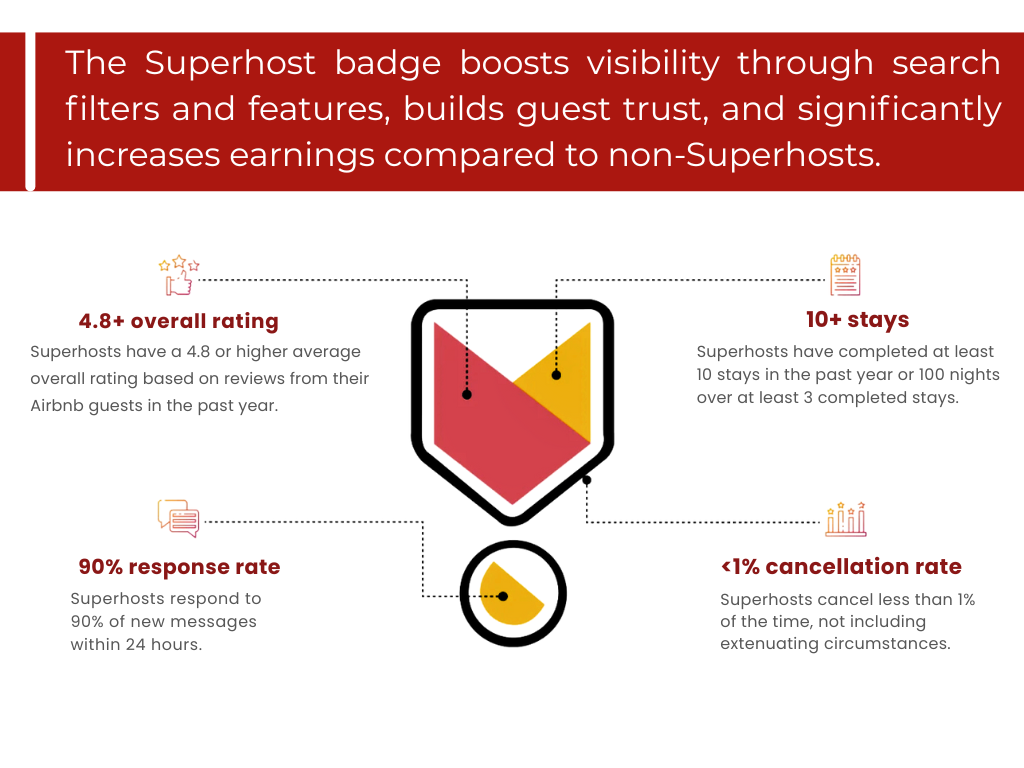
The 4 Core Superhost Requirements for 2026
To qualify, you must be the primary owner of the listing (co-hosts don’t get the credit here) and have an account in good standing. Beyond that, you must hit four specific metrics during the assessment period.
Here is the breakdown of the exact numbers you need to hit:
| Requirement | The Metric You Need to Hit | Why It Matters |
| Response Rate | 90% or higher | Shows guests you are attentive and available. |
| Cancellation Rate | Less than 1% | Proves you are reliable and won’t ruin travel plans. |
| Overall Rating | 4.8 or higher | Confirms your guests consistently love their stay. |
| Completed Stays | 10+ stays (or 3 stays totaling 100+ nights) | Demonstrates you have significant hosting experience. |
1. Maintain a 4.8 Overall Rating
This is often the hardest metric to maintain because it relies entirely on guest perception. You need an average overall rating of at least 4.8 based on reviews from the past year.
- Note on reviews: A review only counts toward your status when both you and the guest have submitted a review, or the 14-day review window closes.
- Strategy: Don’t just provide a bed; provide an experience. Small touches like a handwritten welcome note or local coffee can turn a 4-star “good” stay into a 5-star “memorable” one.

2. Keep a Response Rate of 90% or Higher
Responsiveness is the first indicator of a good host. Airbnb calculates this by looking at the percentage of new guest inquiries you answered within 24 hours over the last 365 days.
- The fix: Use the Airbnb app on your phone. You don’t need to write a novel. A simple “Thanks for your inquiry, I’ll get back to you shortly” counts as a response.
- Pro tip: Set up “Quick Replies” in your hosting dashboard to answer common questions with two taps.

3. Keep Cancellations Under 1%
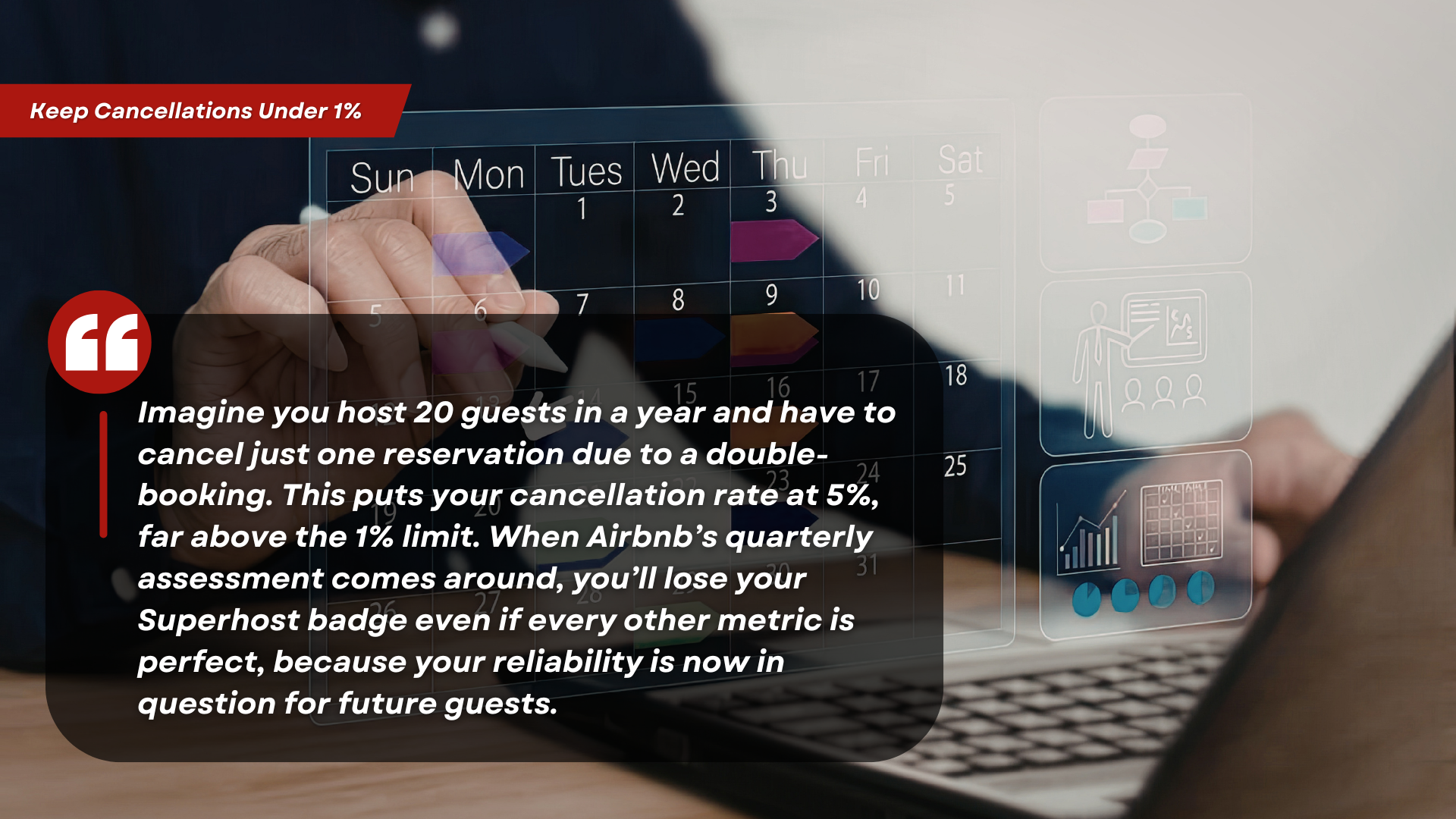
Canceling on a guest is the cardinal sin of hosting. To be a Superhost, you basically cannot cancel. A 1% rate means you can only cancel 1 reservation for every 100 bookings. If you have fewer than 100 bookings, you effectively cannot cancel any without risking your status.
- Exceptions: Airbnb does waive this penalty for “Major Disruptive Events” or valid extenuating circumstances (like severe weather or unexpected damage to the property).
Prevention: Keep your calendar updated religiously. Most cancellations happen because a host forgot to block off dates they couldn’t host.
4. Host at Least 10 Stays
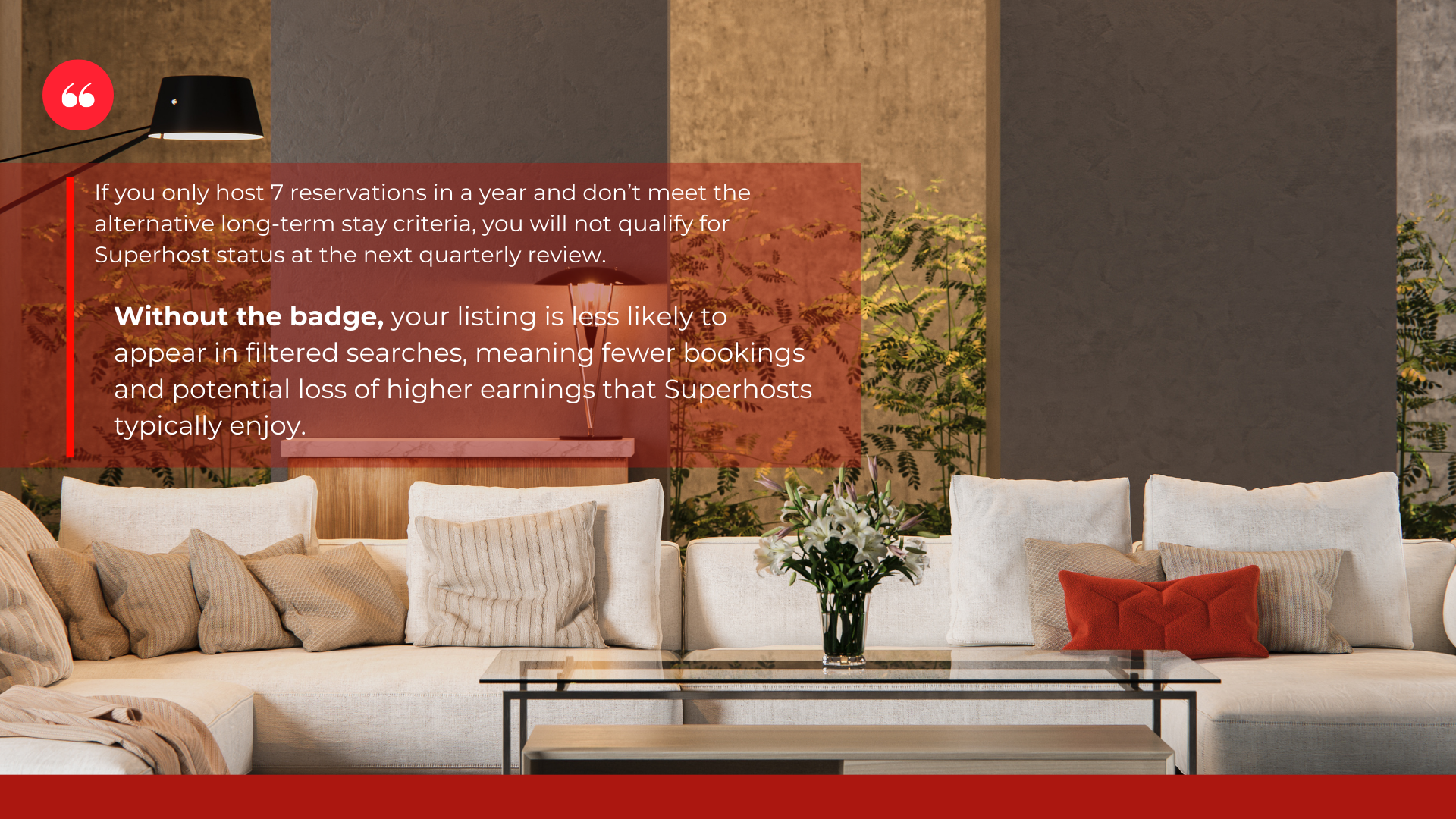
You can’t be a Superhost if you rarely host. You need to complete at least 10 reservations in the past year.
- The alternative: If you specialize in long-term rentals (like 30-day stays), the 10-stay rule might seem unfair. Airbnb covers this: you can also qualify if you complete 3 reservations that total at least 100 nights.
Why Chase the Badge? The Real Benefits
Is it worth the stress of tracking decimal points on your rating? The data says yes. Superhosts aren’t just cool; they make more money.
Increased Earnings and Visibility
Guests trust the badge. According to internal data, Superhosts earn significantly more than non-Superhosts. The badge acts as a trust signal, making guests confident that your listing isn’t a scam or a dump.
- Search Filter: Guests often filter their search results to show only Superhosts. If you don’t have the badge, you disappear from these searches entirely.
- Email Features: Airbnb frequently features Superhost homes in promotional emails and curated collections.
Bonuses and Rewards
- $100 Travel Coupon: If you keep your Superhost status for a full year, Airbnb gives you a $100 travel coupon.
- 20% Extra Referral Bonus: When you refer new hosts to the platform, you get an extra 20% on top of the standard referral bonus.
How to Check Your Progress
You don’t have to guess where you stand. You can track your metrics in real-time:
- Go to your Host Dashboard.
- Navigate to Opportunities or Stats.
- Look for the Superhost section.
This dashboard will tell you exactly which metric is dragging you down so you can fix it before the next assessment date (Jan 1, Apr 1, Jul 1, or Oct 1).
3 Actionable Tips to Secure Your Status in 2026
Knowing the requirements is one thing; meeting them is another. Here is how top performers ensure they hit those numbers every quarter.
1. Automate Your Communication
Missing a message often kills the 90% response rate goal.
- Use Scheduled Messages: Set up automated messages that go out immediately after a booking, 3 days before check-in, and the morning of checkout. This keeps guests informed without you being glued to your phone.
- Answer Inquiries Instantly: Even if you can’t accept a booking request right away, reply with a question or a “Hello” immediately to stop the response timer clock.
2. Audit Your Listing Photos
To hit that 4.8 rating, expectation management is key. Negative reviews often stem from a disconnect between the photos and reality.
- Refresh Your Gallery: If you bought a new couch or repainted a wall, update the photos.
- Be Honest: If the street is noisy or the stairs are steep, mention it. Guests forgive flaws they expect; they punish flaws that surprise them.
3. Open Your Calendar
Struggling to hit the 10-stay requirement? You might be too restrictive.
- Allow Shorter Stays: If you usually require a 3-night minimum, try lowering it to 2 nights during slow seasons to rack up reservation counts.
- Reduce Lead Time: Allow guests to book closer to the check-in date (e.g., same-day bookings) to capture last-minute travelers.
Why Maintaining Superhost Status Is Hard to Do Alone
On paper, Airbnb Superhost requirements look manageable. In reality, maintaining them consistently every day, every night, every weekend is where most hosts struggle.
Response time doesn’t pause while you’re asleep. Reviews don’t wait for busy seasons to end. And cancellations, even rare ones, can undo months of perfect performance. In competitive markets like Orlando, slipping below Superhost standards often means slipping off page one.
The challenge isn’t knowing the rules.
It’s executing them 24/7 without burnout.
How Professional Management Protects Superhost Metrics
This is where most successful Superhosts draw the line between DIY hosting and professional support.
At FunStay Florida, Superhost-level performance isn’t an accident. It’s built into daily operations. Our local team handles 24/7 guest communication, review protection, calendar management, and issue resolution, ensuring response rates stay high and cancellations stay low.
We don’t rely on automation alone. We combine smart systems with real people because speed matters, but accuracy and hospitality close the deal.
Common Questions About Superhost Status
Airbnb Superhost Requirements Conclusion
Becoming an Airbnb Superhost in 2026 isn’t about luck or one great stay. It’s about consistency. Every message answered, every guest cared for, every metric protected.
If maintaining those standards feels stressful, that’s not failure. It’s feedback. The most successful hosts don’t do everything themselves. They build systems and teams that protect performance long-term.
Superhost status rewards preparation, not exhaustion.
If keeping your Superhost metrics perfect feels overwhelming, it may be time to stop doing it alone.
