

<30
Days = Short-Term Rental
$275
First-Year Registration
14.5%
Total Tax per Booking
Orlando attracts tens of millions of visitors every year, and that tourism demand makes it one of the most appealing markets in the country for Airbnb and Vrbo hosts. But before you list a single night on any platform, there is one critical question you need to answer: Does your property’s zoning actually allow short-term rentals?
Understanding Airbnb zoning laws in Orlando is not optional. It is the foundation of legal, profitable hosting. Zoning determines whether your property can operate as a vacation rental at all. Get it wrong, and you face fines starting at $250 per day, permit revocation, delisting from booking platforms, and even legal action. Get it right, and you unlock one of the strongest short-term rental markets in the United States.
This guide breaks down Orlando’s STR zoning framework, explains how to verify your property’s eligibility, and covers the differences between the City of Orlando and surrounding Orange County, so you can host with confidence and full compliance.
How Orlando Defines Short-Term Rentals
In the City of Orlando, a short-term rental is any residential property rented for fewer than 30 consecutive days. This definition applies to listings on Airbnb, Vrbo, Booking.com, and direct booking websites alike. If a guest stays fewer than 30 days, the property falls under Orlando’s short-term rental regulations regardless of the platform used.
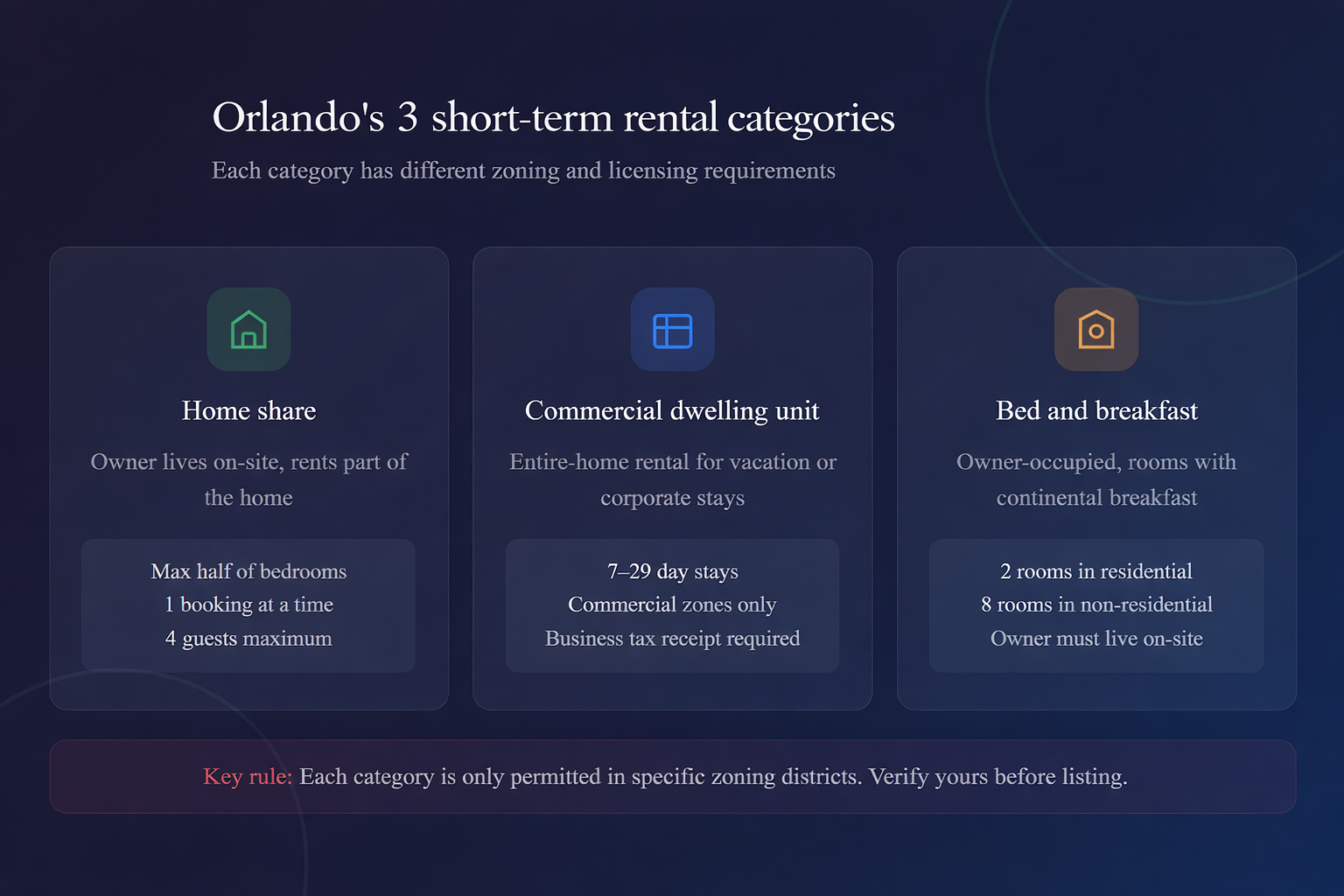
Orlando’s city code recognizes several categories of short-term accommodations, and each one has different zoning and licensing requirements. The categories that matter most for individual hosts and investors are:
- Home Share: A partial rental where the owner or tenant lives on-site and rents out up to half of the bedrooms. This is the category that covers most Airbnb-style rentals in Orlando’s residential zones.
- Commercial Dwelling Unit: An entire-home rental for stays between 7 and 29 consecutive days, typically in commercially zoned areas. This category is used for vacation rentals and corporate stays.
- Bed and Breakfast: An owner-occupied property offering rooms and a continental breakfast, limited to two rooms in residential districts and up to eight in non-residential districts.
⚠️Important Distinction
Each category is permitted only in specific zoning districts. A property that qualifies for home sharing may not qualify for a commercial dwelling unit, and vice versa. Make sure you identify the right category for your situation.
Orlando’s Zoning Framework for Short-Term Rentals
Zoning is the single biggest factor determining whether you can legally operate a vacation rental in Orlando. The city’s zoning code divides land into residential, commercial, and mixed-use districts, and short-term rental permissions vary significantly across these zones.
The Owner-Occupied Rule
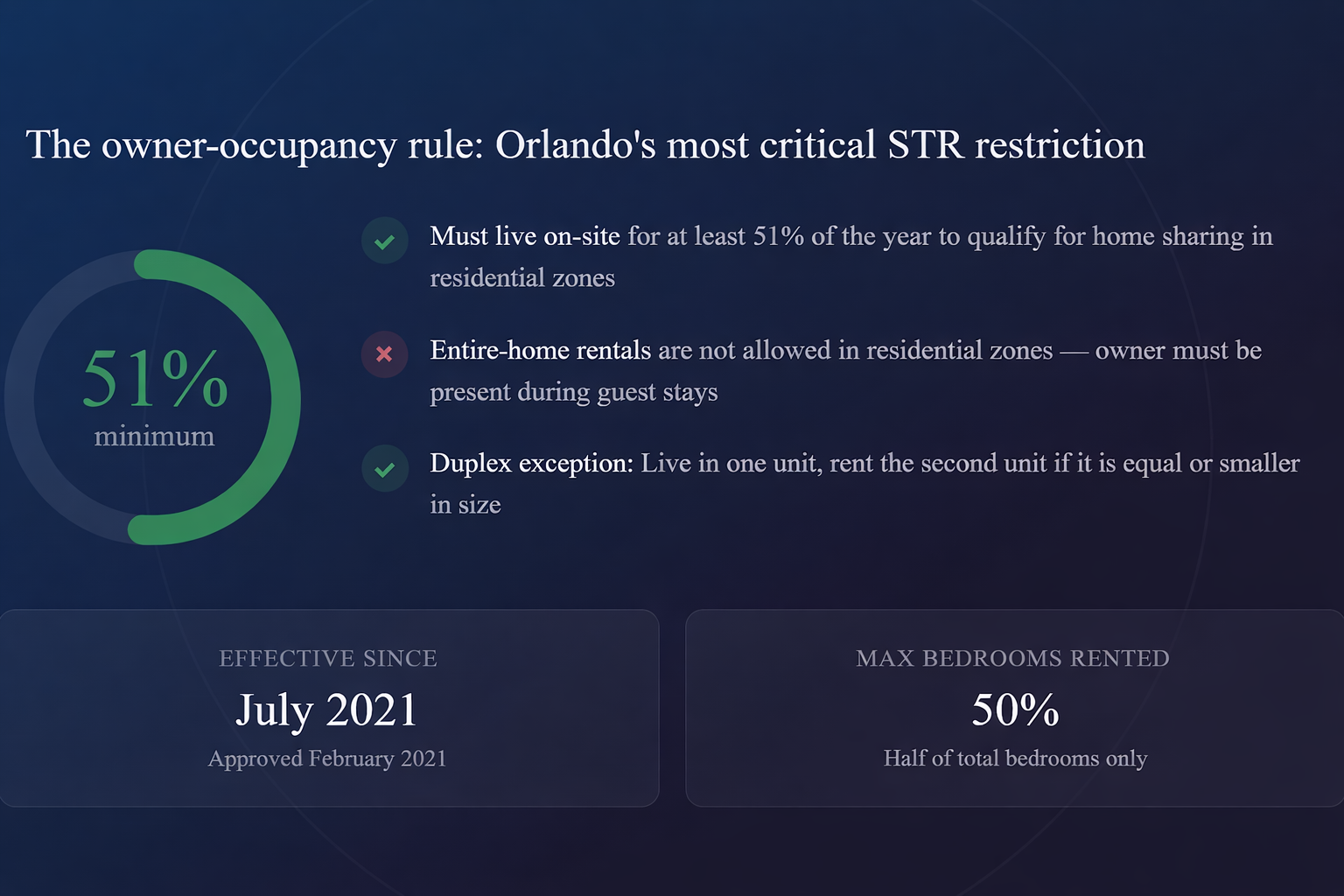
The most important zoning restriction in Orlando is the owner-occupancy requirement. Under the city’s home-sharing ordinance approved by city commissioners in February 2021 and effective July 2021, homeowners may rent part of their property on a short-term basis, but only if they live on-site for at least 51% of the year.
🚫Critical Rule
Renting out your entire home as an Airbnb while you live elsewhere is not permitted in Orlando’s residential zones. Only owner-occupied home sharing is allowed, with a maximum of half the bedrooms rented, one booking at a time, and no more than four guests total.
Under the home-sharing rules, hosts can rent a maximum of half the bedrooms in their home. Only one booking is allowed at a time, and occupancy is capped at two guests per bedroom with no more than four guests total in a single rental.
Residential vs. Commercial Zoning
In residential zones, the only short-term rental activity allowed is owner-occupied home sharing. Entire-home rentals, where the owner is absent during the guest’s stay, are prohibited in residential districts. If you want to operate an entire-home vacation rental, the property must be located in a commercial or mixed-use zone where commercial dwelling units are a permitted use.
Some cities around the country have created STR overlay zones, designated areas where short-term rentals receive special permissions. Orlando’s approach is more restrictive: the zoning table in the city code specifies which rental types are allowable in each district, and hosts must verify their specific zoning designation before listing.
Duplex Owners: A Special Case
Owners of duplexes receive a slight exception under the 2021 ordinance. If a duplex owner lives in one unit, they may rent out the entire second unit on a short-term basis, provided the second unit is on the same site and is equal to or smaller in size than the owner’s unit. This is one of the few ways to legally offer an entire-unit rental in a residential area within the City of Orlando.
How to Check Your Property’s Zoning
Before investing in a property or listing your current home, you need to confirm its zoning designation. Here is how to do it step by step:
- Verify your location is within city limits. Search your address at www.ocpafl.org and look at the “Municipality” field. If it says “Unincorporated,” your property falls under Orange County rules, not the City of Orlando’s.
- Check your zoning district. Visit orlando.gov/zoning to find your property’s zoning classification and view the table of allowable uses. Not all rental types are permitted in all categories.
- Contact the planning department. If you are unsure how to interpret the zoning map, call the City of Orlando’s planning or zoning department directly. They can confirm whether home sharing or commercial dwelling units are allowed at your address.
- Request a title report or zoning lookup. Your real estate agent or title company can provide zoning verification as part of the due diligence process when purchasing a property.
⚠️Don’t Assume Based on Neighbors
Just because other Airbnb listings exist in your neighborhood doesn’t mean your property is automatically eligible. Some existing listings may be grandfathered in, operating without permits, or could face enforcement action at any time.
City of Orlando vs. Unincorporated Orange County: Key Differences
One of the most common sources of confusion for Orlando-area hosts is the difference between the City of Orlando’s rules and Orange County’s rules. These are separate jurisdictions with distinct STR regulations.
| Regulation | City of Orlando | Unincorporated Orange County |
| Entire-Home Rentals (Residential) | Not Allowed | Allowed |
| Owner-Occupancy Required | Yes (51%) | No |
| STR Permit Fee | $275 first year / $125 renewal | $63 (valid 2 years) |
| Occupancy Limit | 2/bedroom, max 4 total | 2/bedroom + 2 additional |
| Bedroom Limit | Half of total bedrooms | No bedroom limit |
💡Investor Tip
A property just a few miles outside Orlando city limits may offer significantly more flexibility for short-term rental operations. Always verify which jurisdiction your property falls under before making investment decisions.
HOA Restrictions That Can Override Zoning Permissions
Even if your property’s zoning allows short-term rentals, your Homeowners Association can still prohibit them. HOA rules operate independently of city zoning, and they frequently impose stricter limitations. The 2021 Orlando home-sharing ordinance explicitly states that it does not override existing HOA or neighborhood association restrictions.
Common HOA restrictions include outright bans on rentals under 30 days, limits on the number of rentals allowed within a community, and requirements to register or obtain written approval before hosting guests. Some HOAs have been known to pursue legal action against owners who violate these rules.
Before you list your property, request the CC&Rs (Covenants, Conditions & Restrictions) and review the HOA bylaws carefully. If the documents are unclear, contact the HOA board directly for written clarification. In condominiums and apartment complexes, you should also review the building’s individual rules and management agreements, as these may contain additional short-term rental restrictions.
Registration, Fees, and Tax Obligations
Once you have confirmed that your zoning and HOA allow short-term rentals, you must complete the registration and licensing process before accepting your first booking.
City of Orlando home-sharing registration costs $275 for the first year and $125 for annual renewal. You must also obtain a state vacation rental license from the Florida DBPR, which costs approximately $170 per year for a single unit. Your property must pass a safety inspection, and you need to provide proof of your DBPR license when registering with the city.
Tax obligations add another layer of compliance. Orlando-area hosts must collect and remit:
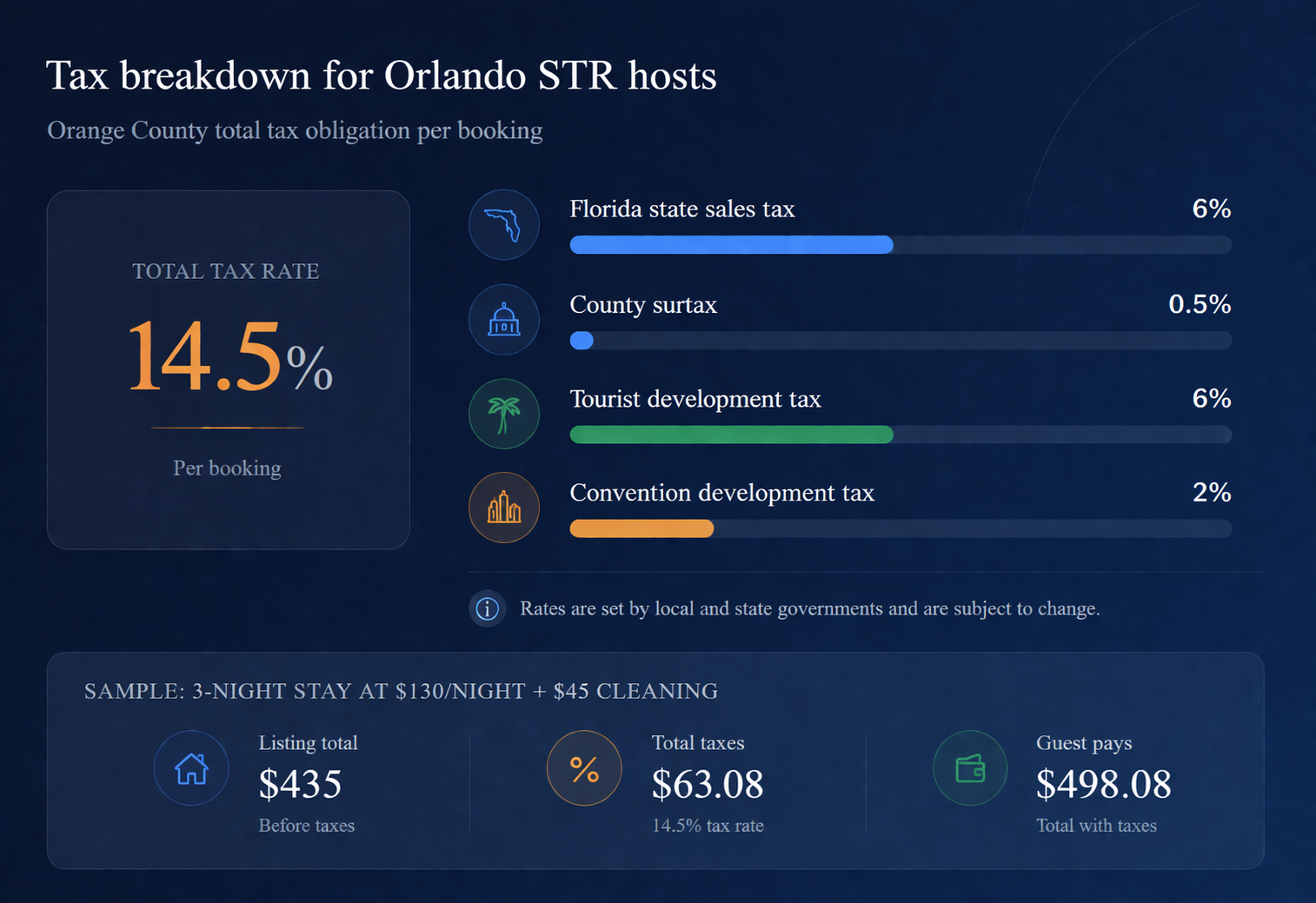
- 6% Florida State Sales Tax
- 0.5% County Surtax
- 6% Tourist Development Tax
- 2% Convention Development Tax (Orange County)
This brings the total tax burden to approximately 14.5% per booking. While Airbnb and Vrbo may automatically collect some of these taxes, hosts remain responsible for verifying that all taxes are properly filed. Registration with the Florida Department of Revenue and your county tax collector is mandatory.
Penalties for Non-Compliance
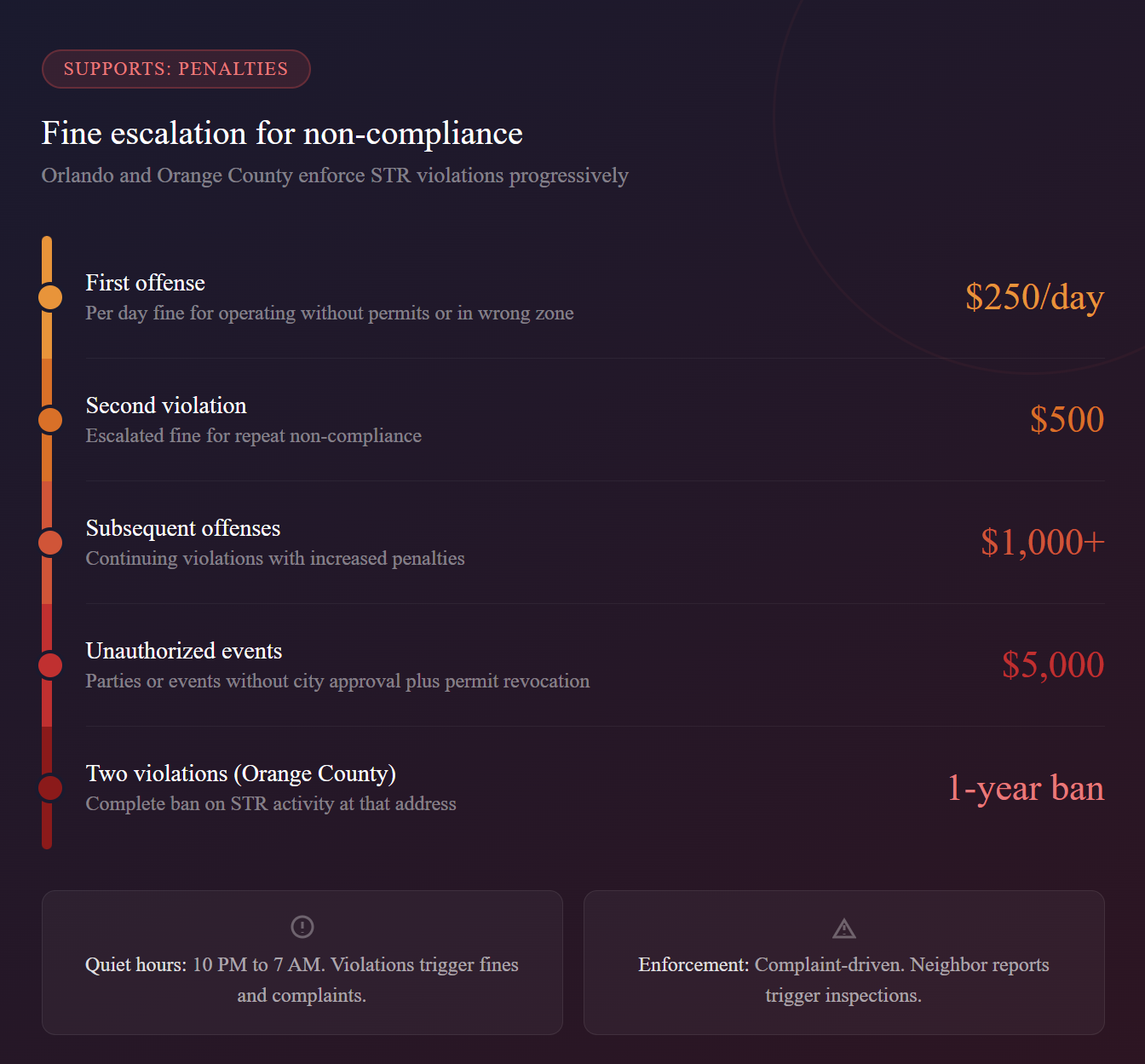
Orlando and Orange County take STR enforcement seriously. Operating in the wrong zoning district or without proper permits can result in:
- $250/day for a first offense
- $500 for a second violation
- $1,000+ for subsequent offenses
- Up to $5,000 for unauthorized parties/events
- 1-year ban after two violations (Orange County)
The city also enforces quiet hours from 10 PM to 7 AM, and enforcement is largely complaint-driven. Neighbors who report violations will trigger inspections and potential penalties.
Let FunStay Handle Your Compliance
From DBPR licensing and zoning verification to dynamic pricing and 24/7 guest support, we handle the details so your property stays legal, profitable, and stress-free.
Or call us at (321) 430-8681
Frequently Asked Questions
1. Can I rent my entire house on Airbnb in Orlando?
In the City of Orlando’s residential zones, renting out your entire home as a short-term rental is not permitted. The city’s home-sharing ordinance requires the owner or tenant to live on-site for at least 51% of the year, and allows renting only up to half of the bedrooms. However, entire-home rentals may be allowed in commercially zoned areas within the city or in unincorporated Orange County, where the owner-occupancy requirement does not apply. Always confirm your property’s zoning district and jurisdiction before listing.
2. How do I check if my Orlando property is zoned for short-term rentals?
Start by visiting www.ocpafl.org to confirm whether your property is within the City of Orlando or unincorporated Orange County. Then check your zoning district at orlando.gov/zoning to see the table of allowable uses. If you need help interpreting the results, contact the city’s planning department or work with a local real estate professional who specializes in vacation rentals.
3. What is the difference between the City of Orlando and Orange County STR rules?
The City of Orlando only permits owner-occupied home sharing in residential zones and prohibits entire-home short-term rentals unless the property is in a commercial or mixed-use district. Unincorporated Orange County is more flexible; entire-home rentals are allowed in both residential and commercial zones, and there is no owner-occupancy requirement. The county requires its own STR permit ($63, valid for two years), separate from the city’s home sharing registration.
4. Can my HOA prevent me from doing Airbnb even if zoning allows it?
Yes. HOA rules operate independently of city zoning laws and can impose stricter restrictions, including outright bans on rentals under 30 days. Orlando’s 2021 home-sharing ordinance specifically states it does not override existing HOA or neighborhood restrictions. Always review your CC&Rs and HOA bylaws before investing in or listing a short-term rental property.
5. What permits and licenses do I need to host in Orlando?
At minimum, you need a state vacation rental license from the Florida DBPR (approximately $170 per year), a City of Orlando home sharing registration ($275 first year, $125 renewal), and registration with the Florida Department of Revenue and your county tax collector for tax remittance. Your property must also pass a safety inspection with working smoke detectors, carbon monoxide alarms, fire extinguishers, and emergency exit plans.
6. What are the fines for operating an Airbnb without proper zoning or permits in Orlando?
Fines start at $250 per day for a first violation, and escalate to $500 and then $1,000 or more for repeat offenses. Hosting unauthorized events can trigger fines up to $5,000. In Orange County, two violations can lead to a one-year ban on short-term rental activity at that address. Additionally, operating without registration can lead to permit revocation and delisting from booking platforms.