Most investors who enter the Orlando vacation rental market don’t fail because of bad timing. They fail because they skip steps. They buy in the wrong zone, underestimate operating costs, or launch a property that looks like every other listing on Airbnb.
Short-term rental investing in Orlando is one of the strongest plays in U.S. real estate right now. But “strong market” doesn’t mean “easy money.”
Read on to learn exactly how to start a short-term rental in Orlando, from market analysis and property selection to compliance, setup, and optimization.
Why Orlando Is a Top Market for Short-Term Rental Investment
Before diving into execution, you need to understand why this market works.
Orlando isn’t just a tourist town. It’s a tourism economy backed by infrastructure, population growth, and consistent demand drivers that most U.S. markets can’t match.
Here’s what separates Orlando from other short-term rental markets:
- Year-round demand. Unlike coastal or ski markets, Orlando doesn’t have an off-season. Theme parks, conventions, and family travel keep occupancy rates strong across all 12 months.
- Investor-friendly zoning. Several counties in the Orlando metro, especially Osceola and Polk, have designated zones where short-term rentals are legally permitted and actively encouraged.
- Resort-style communities built for STR. Developments such as ChampionsGate, Reunion Resort, and Storey Lake were designed with vacation-rental investors in mind. HOAs here support short-term rentals, rather than restrict them.
- Strong nightly rate potential. Properties near Disney and Universal consistently command premium nightly rates, especially during peak seasons like summer, spring break, and the holiday corridor.
Orlando is a market with a proven track record for investors who do the work up front.
Is Short-Term Rental Investing Profitable in Orlando?
The short answer: yes, when the numbers are run correctly.
The longer answer: profitability depends entirely on your purchase price, financing terms, operating costs, and how well the property is managed.
What Drives Profitability
- Occupancy rates in well-located, well-managed Orlando vacation rentals typically range from 70–85% annually.
- Average daily rates (ADR) vary by property size, location, and amenities, but 4–6 bedroom homes near Disney can command 200–450+ per night depending on season.
- Cash flow is the priority. Short-term rental investors should focus first on monthly cash flow, and appreciation second. This is active income, not passive buy-and-hold.
What Kills Profitability
- Buying in a community where the HOA prohibits short-term rentals (this happens more than you’d think).
- Overestimating nightly rates based on top-performing comps instead of conservative averages.
- Ignoring the true cost of management, cleaning, maintenance, taxes, and insurance.
- Failing to budget for vacancy and seasonality dips in January, February, and September.
Run conservative projections. Then stress-test them. If the deal only works with best-case occupancy, it’s not a deal.
Step 1: Confirm Zoning and HOA Compliance
This is the single most important step in any Orlando short-term rental investment. Get this wrong, and nothing else matters.
What You Need to Verify
- County zoning: Not all areas in the Orlando metro allow rentals under 30 days. You need to confirm that the specific parcel is zoned for short-term rental use.
- HOA rules: Even if the county allows it, the Homeowners Association can prohibit, limit, or restrict short-term rentals. Some HOAs cap the number of rental days per year. Others ban them outright.
- Community type: Stick with communities built for vacation rental use. These have HOAs that support short-term rental activity and offer resort-style amenities that guests expect.
Best Areas for Short-Term Rental Investing in Orlando
| Area | Profile |
| Kissimmee | The epicenter of Orlando vacation homes. Close to Disney. High rental demand. |
| Davenport | Strong value-to-income ratio. Growing inventory of investor-friendly communities. |
| Champions Gate | Premium resort community with golf, pools, and high-end amenities. |
| Reunion Resort | Ultra-luxury positioning. Higher entry price, higher nightly rates. |
Do not skip this step. Work with a buyer’s agent who specializes in Orlando vacation rental properties and can verify zoning and HOA rules before you make an offer.
Step 2: Run Your Numbers Like an Operator, Not a Dreamer
This is where most first-time investors go sideways. They see gross revenue projections and forget about the 15+ line items that eat into that number.
Build a Conservative Pro Forma That Includes:
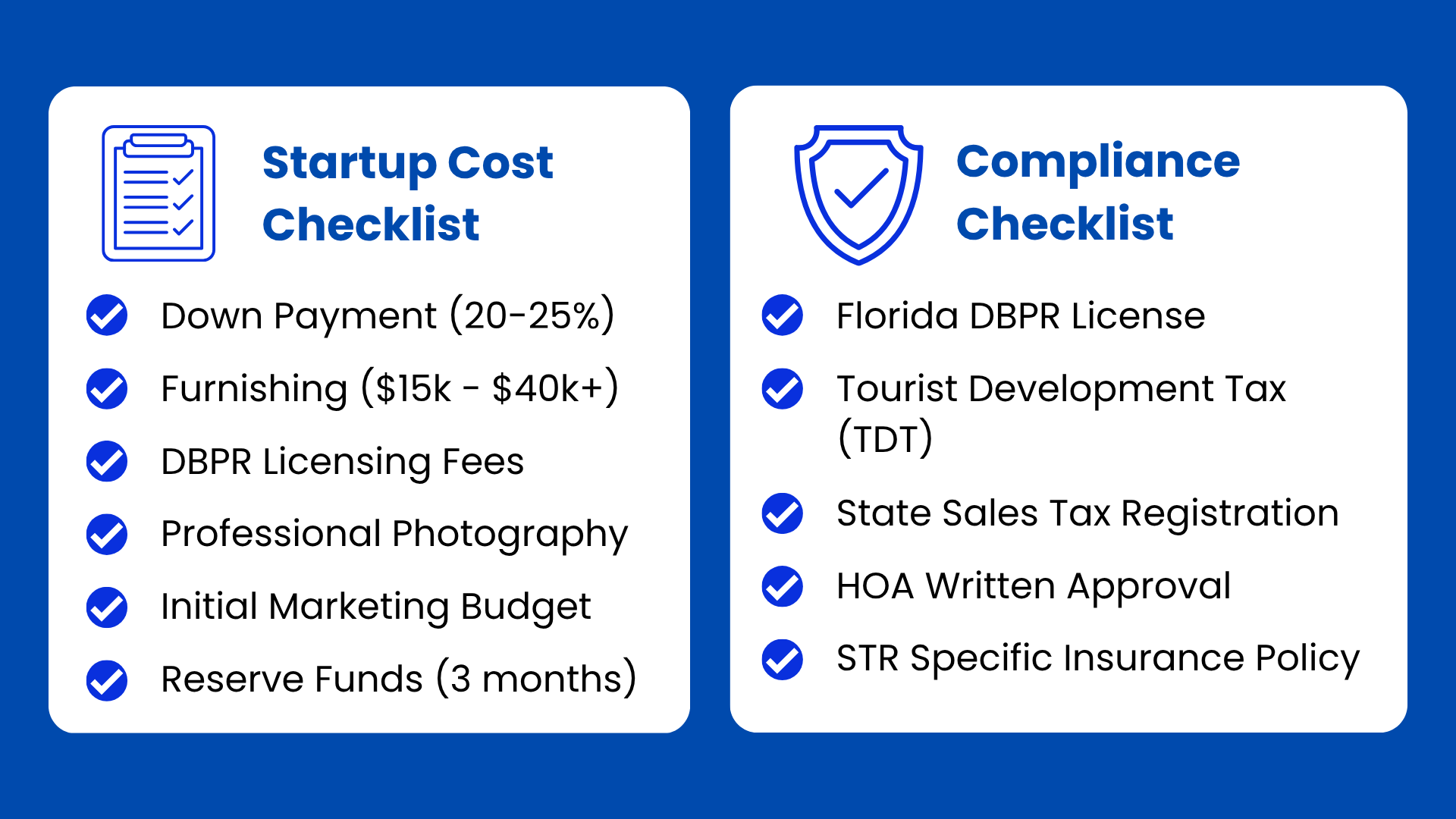
- Mortgage payment (most lenders require 20–25% down for investment properties, at current rates)
- Property management fees (typically 15–25% of gross rental income)
- Cleaning costs (per turnover, this adds up fast with short stays)
- Platform fees (Airbnb, Vrbo, Booking.com all take a cut)
- Utilities (electric bills in Florida are no joke, especially with pools and A/C)
- Insurance (standard homeowner’s insurance won’t cover you. You need vacation rental-specific coverage)
- Property taxes and tourist development tax
- Maintenance and repairs reserve
- Furnishing and setup costs (budget 15,000– 40,000+, depending on property size and quality)
If the deal doesn’t cash flow with conservative occupancy estimates (65–70%), move on. There are enough properties in this market that you don’t need to force a bad deal.
Step 3: Secure the Right Financing
Short-term rental properties are classified as investment properties by lenders. That means different terms than a primary residence.
What to Expect:
- Down payment: 20–25% minimum
- Interest rates: Slightly higher than owner-occupied loans
- Debt Service Coverage Ratio (DSCR) loans: Popular with STR investors because qualification is based on the property’s projected income, not your personal income
- Cash purchases: If you’re a foreign investor or want to move quickly, cash offers are common in this market and can give you leverage in negotiations
Talk to a lender who understands short-term rental investment properties specifically. Not all loan officers know how to underwrite STR income.
Step 4: Get Licensed and Stay Compliant
Operating without the right licenses in Florida isn’t just risky. It’s expensive. Fines are real, and platforms are increasingly cooperating with local enforcement.
Required Licenses and Registrations:
- DBPR License — Florida’s Department of Business and Professional Regulation requires all short-term rental properties to hold a lodging establishment license. This is a state-level requirement.
- Tourist Development Tax (TDT) Registration — You must register with the county Tax Collector’s office to collect and remit the local tourist tax (varies by county; Osceola County has its own rate).
- Sales Tax Registration — Register with the Florida Department of Revenue for state sales tax collection.
- ITIN (for foreign investors) — If you don’t have a Social Security Number, you’ll need an Individual Taxpayer Identification Number from the IRS for tax filing purposes.
- Local permits — Some municipalities have additional registration or permit requirements. Check at the city level.
Set this up before your first guest arrives. Retroactive compliance is always more expensive than doing it right the first time.
Step 5: Furnish and Design for Revenue, Not Personal Taste
Your property’s interior directly impacts your nightly rate, occupancy, and review scores. This isn’t about what you like. It’s about what guests book.
Design Principles That Drive Bookings:
- Themed rooms win in Orlando. Disney, Marvel, Star Wars, Harry Potter, families with kids will pay a premium and book further in advance for properties with immersive themed bedrooms.
- Prioritize sleeping capacity. A 5-bedroom home that sleeps 12+ guests opens your property to larger family groups and reunion travel. Use bunk rooms strategically.
- Fully equipped kitchen. This is a core advantage over hotels. Stock it properly with cookware, utensils, coffee maker, spices, the works.
- Smart TVs and fast Wi-Fi in every room. This is baseline, not a bonus.
- Pool and outdoor space. In Florida, a private pool is practically required. If the community has a resort pool, waterpark, or lazy river, even better.
- “Instagrammable” details. Small design touches that photograph well lead to organic social media exposure and stronger listing photos.
Hire a Professional Photographer
This is non-negotiable. Professional listing photos can increase bookings by 40% or more. A 300–500 photo shoot is one of the highest-ROI investments you’ll make on the property.
Capture every room, every amenity, every unique detail. Pair photos with clear, benefit-driven descriptions that speak directly to your target guest.
Step 6: List, Price, and Optimize Across Platforms
Your property is only as profitable as its visibility and pricing strategy.
Where to List Your Orlando Vacation Rental:
- Airbnb
- Vrbo
- Booking.com
- Direct booking website
Pricing Strategy That Actually Works:
Static pricing is a revenue killer. Use dynamic pricing tools like PriceLabs or Beyond Pricing to automatically adjust your rates based on:
- Seasonal demand (summer, holidays, spring break = peak)
- Local events and conventions
- Day-of-week patterns
- Competitor pricing
- Booking lead time
Set clear house rules, cancellation policies, and check-in procedures upfront. Transparency reduces disputes and protects your reviews.
Step 7: Decide on Self-Management vs. Property Management
This decision shapes your entire investor experience.
Self-Management
Works if you’re local, hands-on, and willing to handle guest communication, cleaning coordination, maintenance calls, and platform optimization yourself. Not recommended for out-of-state or international investors.
Professional Property Management
A qualified Orlando-based property manager handles:
- Listing optimization and dynamic pricing
- Guest communication (24/7)
- Cleaning and turnover coordination
- Maintenance and emergency response
- Tax compliance and financial reporting
A property management company typically charges between 15–25% of your gross rental income. A good one will earn back their fee (and then some) through higher occupancy, better rates, and fewer operational mistakes.
Step 8: Protect Your Investment
Insurance
Standard homeowner’s insurance does not cover short-term rental activity. You need a policy specifically designed for vacation rental properties that includes:
- Guest liability coverage
- Property damage protection
- Loss of rental income coverage
- Hurricane and wind coverage (this is Florida, don’t skip this)
- Flood insurance (if applicable to your zone)
Platform-provided coverage (like Airbnb’s Host Guarantee) is a supplement, not a replacement for a dedicated policy.
Legal Structure
Many investors hold their short-term rental properties in an LLC for liability protection and tax flexibility. Consult a real estate attorney and CPA familiar with Florida vacation rental investments to determine the right structure for your situation.
Common Mistakes to Avoid in Orlando STR Investing
Even experienced investors make these common mistakes when entering a new market. Avoid these, and you’re already ahead of most buyers:
- Buying before verifying zoning and HOA rules. This is the #1 mistake.
- Using optimistic revenue projections instead of conservative underwriting.
- Ignoring tourist development tax and sales tax obligations.
- Furnishing cheaply and wondering why reviews are mediocre.
- Skipping professional photography.
- Using static pricing instead of dynamic revenue management tools.
- Trying to self-manage from 1,000 miles away.
- Underinsuring the property.
Why Investors Work With Mike Chen
You’ve just read the playbook. Now here’s the part most guides leave out: execution depends on who’s guiding you through it.
Mike Chen isn’t a blogger writing about Orlando real estate from a laptop. He’s a short-term rental property manager who lives and works inside this market every day.
What Mike Brings to the Table
Mike has spent years helping investors, both domestic and international, navigate the Orlando short-term rental landscape from first conversation to first guest check-in. His experience isn’t theoretical. It’s built from hundreds of transactions, property analyses, and real-world operational decisions in the communities where vacation rental investing actually works.
Here’s what that experience looks like in practice:
- Zoning and HOA verification before you ever make an offer. Mike knows which communities welcome short-term rentals and which ones will shut you down. He’s seen investors lose deposits and deals over HOA restrictions that could have been flagged in a 10-minute call.
- Conservative underwriting, not sales pitches. Mike runs numbers the way operators run numbers with real management fees, realistic occupancy, and actual tax obligations baked in. If a deal doesn’t work, he’ll tell you before you waste time on it.
- End-to-end guidance. From identifying the right property and negotiating the purchase to coordinating furnishing, licensing, listing optimization, and property management setup, Mike stays involved through every phase.
Who Mike Works With
Mike works with investors who are serious, financially prepared, and ready to move with clarity. Whether you’re:
- A first-time STR investor exploring Orlando vacation rental investment for the first time
- An experienced real estate investor expanding into the short-term rental space
- A foreign investor looking for a trusted local partner to handle compliance, setup, and management
- An out-of-state buyer who needs boots on the ground in the Orlando market
Build a Plan Before You Buy
Short-term rental investing in Orlando is a legitimate, proven strategy, but only when executed with the right market knowledge, financial discipline, and operational infrastructure.
This isn’t passive out of the box. It becomes passive when you set up the right systems, hire the right team, and buy the right property in the right location.
If you’re serious about entering this market, start here:
- Define your investment criteria and budget
- Connect with an Orlando-based buyer’s agent who specializes in STR properties
- Run conservative numbers on 3–5 properties before making an offer
- Build your operations team (property manager, CPA, insurance agent) before you close
The investors who win in this market aren’t the ones who move fastest. They’re the ones who move with the most clarity.
Ready to explore Orlando short-term rental investment opportunities with a team that operates in this market every day?
Get a personalized market analysis, property recommendations, and a clear path to your first (or next) Orlando vacation rental investment.
Have questions about how to start a short-term rental in Orlando?